 Anti-Cacophony Partners
The First 90 Days After a Round Closes: Why You Need a Fractional CFO
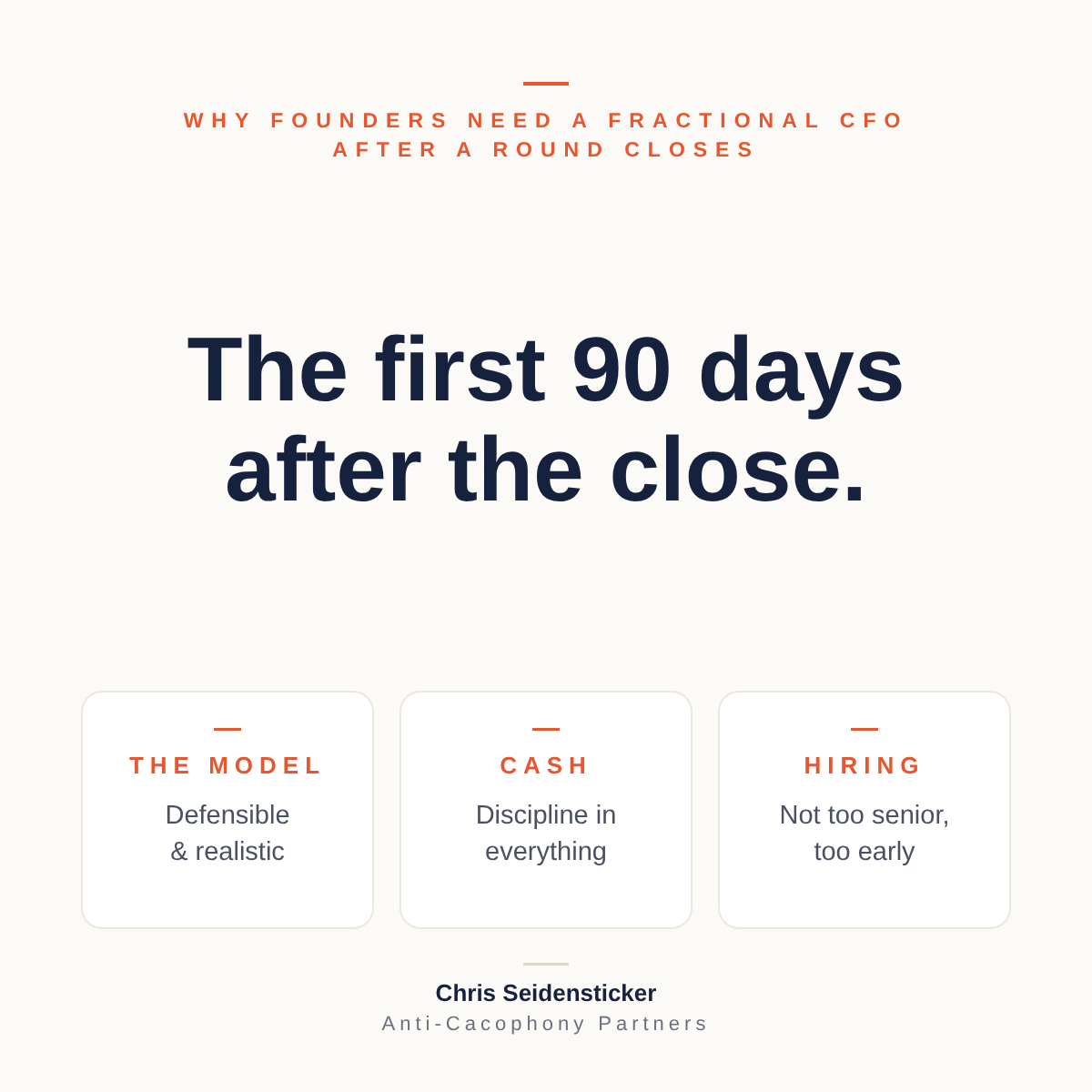
A recent Crunchbase article about the first 90 days after the close of a fundraising round perfectly explains the value prop of having a fractional CFO at the earlier stages of a company: The round closes, the founders are excited but cooked, and then they make poor decisions that have long-term effects:
- They may have over-promised in their investor materials, and now they’re at risk of under-delivering.
- They’re feeling pressure from their new investors (which may actually not be real but self-imposed) to show immediate & amazing results.
- They hire a salesperson who is too senior and who then wants to hire their own team.
- They now have cash in the bank, so they want to go spend it.
With a fractional CFO you have someone:
- Who has built a financial model, essentially your company’s roadmap, that is defensible & realistic, especially over the next 6–12 months, when executing according to the plan is critical.
- Who can be the calm head in the room when everyone wants to do everything all at once or is too cooked to make wise decisions.
- Who has repeatedly helped sales teams scale from the earliest stages & understands the risks of hiring too senior too early.
- Whose most obvious role at the company is to ensure cash discipline is integral to everything.
So when do you bring this person on? Ideally before you’ve started your fundraising process since they can also help you tell the story, pull together the investor materials, including the deck and dataroom, help negotiate terms, own due diligence, and ensure the round closes all while ensuring you’re not over-promising to investors and also getting the company ready to execute post-round close.
But if you cannot bring them on to help with the fundraise prep & closing, then bring them on during those first 90 days and let them bring order to chaos!